


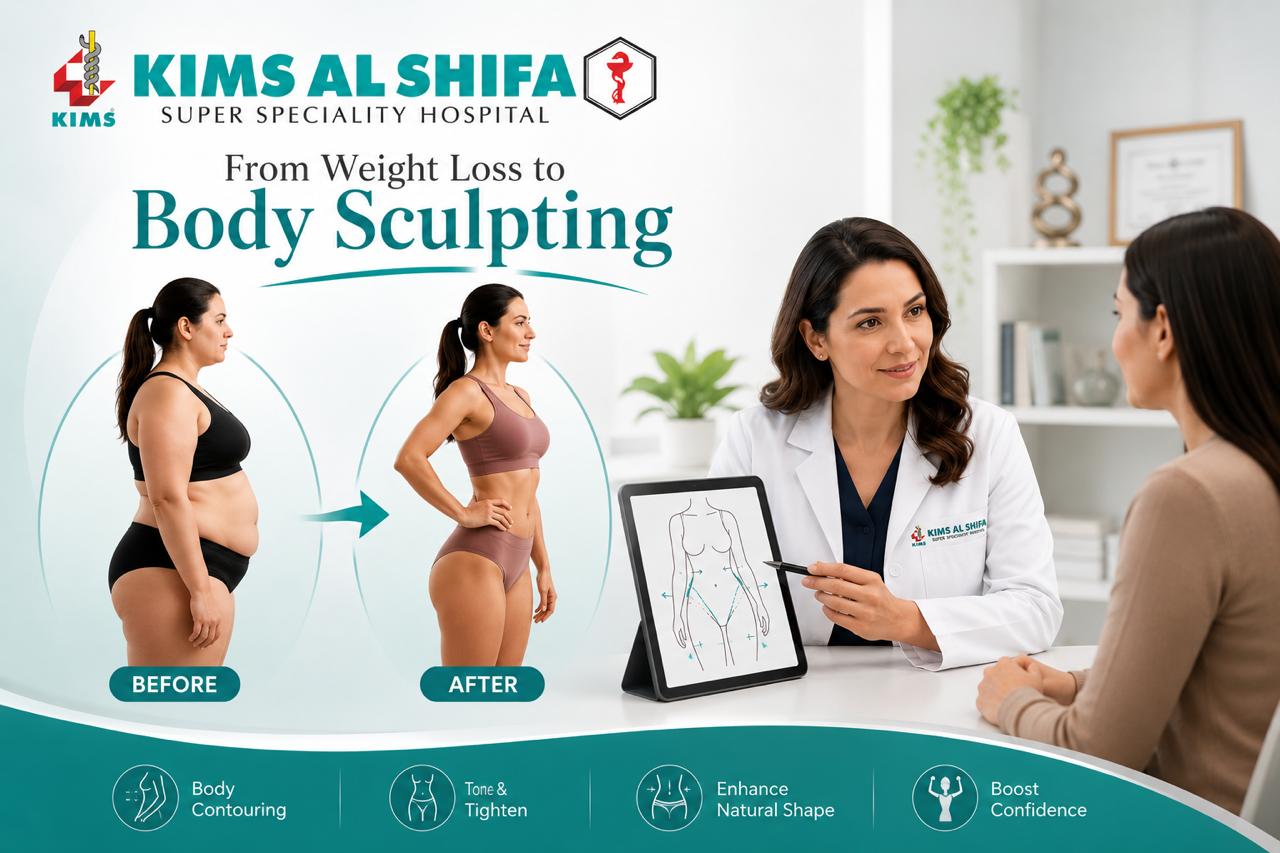
Role of an Aesthetic Plastic Surgeon in a Weight Loss Journey: From Weight Loss to Body Sculpting
05-06-2026
In recent years, the concept of a weight-loss journey has evolved beyond simply achieving a target number on the scale. Today, individuals aspire not only to lose weight but also to attain a balanced, well-contoured physique that reflects health, vitality, and self-confidence. While healthy lifestyle diet modifications, structured exercise programs, and modern medical therapies such as GLP-1 receptor agonists (Ozempic® and Mounjaro®) have revolutionized weight management, significant weight loss often leaves behind challenges that are not addressed by these measures alone.
Excess skin, residual fat deposits, loss of body definition, and changes in body proportions can affect both physical comfort and self-image. This is where aesthetic plastic surgery plays a pivotal role in the final stage of body transformation.
The purpose of this blog is to create awareness about how an aesthetic plastic surgeon contributes to the comprehensive weight-loss journey. Through advanced body contouring procedures and skin-tightening technologies, plastic surgery helps bridge the gap between weight reduction and body refinement, enabling individuals to achieve a natural, harmonious body shape and regain confidence in their appearance.
Understanding the Weight Loss Journey.
A successful weight-loss journey typically starts with sustainable lifestyle modifications, including balanced nutrition and regular physical activity, and may be supported by medical therapies such as Ozempic® and Mounjaro®, or surgical interventions like bariatric surgery when appropriate.
These approaches are highly effective in reducing overall body weight. However, significant weight loss frequently brings its own set of challenges:
- Loose, sagging skin
- Residual stubborn fat deposits
- Loss of body definition
- Disproportionate contours
This is where the journey transitions from Weight loss to Shape. While weight loss improves health parameters, achieving aesthetic balance often requires additional intervention.
The Transition: From Weight Loss to Body Sculpting
After substantial weight loss, many individuals realize that their bodies do not reflect the effort they’ve put in. Despite achieving target weight, the presence of excess skin and uneven contours can hinder their confidence boost.
Plastic surgery bridges this gap by focusing on Body Contouring—reshaping and refining the body to match the patient’s vision. Procedures are not about “losing weight” but about redistributing, removing, and tightening tissues to achieve desired shape and confidence.
Role of Plastic Surgery in Body Transformation
Plastic surgeons play a pivotal role in the final phase of Body Transformation. Their expertise lies in understanding anatomy, aesthetics, and individualized patient goals.
- Body Contouring After Weight Loss
Patients who have undergone massive weight loss often experience redundant skin in areas like the abdomen, arms, thighs, chest and back. Procedures such as abdominoplasty (tummy tuck), arm lift, thigh lift, upper and lower body lift can effectively remove excess skin and restore body contours. In selected patients with mild to moderate skin laxity, advanced skin-tightening technologies such as Renuvion®—which combines J-Plasma and radiofrequency (RF) energy—may be used to enhance skin contraction and improve contour without the need for extensive skin excision.
This phase of Post Weight Loss care is crucial not only for appearance but also for:
- Improving hygiene
- Reducing skin infections
- Enhancing mobility
- Liposuction for Residual Fat
Even after significant weight reduction, some fat deposits remain resistant to diet and exercise. Liposuction helps target these stubborn areas, enhancing Body Sculpting outcomes.
It is important to note that liposuction is not a weight loss method—it is a contouring tool that helps Sculpt Your Body precisely.
- Fat Grafting and Volume Restoration
Weight loss can lead to volume loss in areas such as the face, breasts, and buttocks. Fat grafting uses the patient’s own fat to restore natural contours, contributing to a balanced and youthful appearance.
This adds another dimension to the Weight Loss Journey, focusing on restoration rather than removal.
- Skin Tightening and Rejuvenation
Loose skin is one of the most common concerns after weight loss. Minimal Invasive skin tightening using J Plasma technology and Surgical tightening procedures help redefine body contours, ensuring that the external appearance aligns with the internal health improvements.
GLP 1 Era and the Changing Landscape
Medications like Ozempic® and Mounjaro® have revolutionized the Weight Loss Journey by enabling significant weight reduction in a relatively short time. However, rapid weight loss often leads to increased skin laxity.
Patients achieving weight loss through GLP 1 medication frequently seek plastic surgery to address:
- Facial hollowing (“Ozempic face”)
- Abdominal skin redundancy
- Loss of definition in limbs
Thus, plastic surgeons are becoming integral to managing the Transformation phase that follows medical weight loss.
Psychological Impact: The Confidence Boost
One of the most profound outcomes of plastic surgery in a weight loss journey is the Confidence Boost it provides.
Patients often report:
- Improved self-image
- Enhanced social confidence
- Better quality of life
While weight loss improves health, body contouring completes the emotional and psychological aspect of transformation. Achieving desired contour goals allows individuals to fully embrace their new identity.
Individualized Treatment: No One-Size-Fits-All
Every Weight Loss Journey is unique. Factors such as age, skin quality, amount of weight lost, and patient expectations influence the surgical plan.
Plastic surgeons create customized strategies that may include:
- Staged procedures for safety
- Combination treatments for optimal results
- Realistic goal setting
This personalized approach ensures that each Body Transformation is safe, effective, and aligned with patient aspirations.
Safety and Ethical Considerations
Awareness is crucial when considering plastic surgery. Patients must understand that:
- Surgery is not a shortcut for weight loss
- Timing matters—weight should be stable before procedures
- Qualified, board-certified plastic surgeons should be chosen
- Proper post-operative care is essential
Ethical practice emphasizes patient education, realistic expectations, and long-term well-being.
The Journey Continues: Maintenance and Lifestyle
Plastic surgery marks a milestone, not the end of the Weight Loss Journey. Maintaining results requires:
- Healthy eating habits
- Regular physical activity
- Stable body weight
- Follow-up care
Sustainable lifestyle choices ensure that the results of Body Contouring procedures are long-lasting.
Breaking Myths Around Plastic Surgery
Despite advancements, several misconceptions persist:
Myth: Plastic Surgery is only for cosmetic purpose.
Reality: It gives a meaningful completion to your transformation journey.
Myth: Results are artificial
Reality: Modern techniques aim for natural, proportionate outcomes
Myth: Its only for celebrities
Reality: Increasing awareness and accessibility have made it a viable option for many individuals.
Conclusion: Completing the Transformation
The journey from weight loss to body confidence is multifaceted. While diet, exercise, and medical and surgical intervention initiate the process, plastic surgery refines and completes it.
Plastic surgeons are partners in transformation. They help individuals transition from shedding weight to achieving their ideal shape, from physical change to emotional empowerment.
In essence, the role of a plastic surgeon in a Weight Loss Journey is to bridge the gap between effort and outcome. This holistic approach ensures that every Body Transformation is not just seen—but felt.
As awareness grows, it is important to recognize plastic surgery as a valuable, ethical, and transformative component of modern weight management. When combined with healthy living, it empowers individuals to embrace their fullest potential—physically, emotionally, and confidently.
“Because true transformation is not just about losing weight—it’s about becoming your best self.”
Dr Jacob Antony Chakiath
Aesthetic Plastic Surgeon
